

Picking Up the Pieces Program: Survivor GO! Bags for Rural Communities
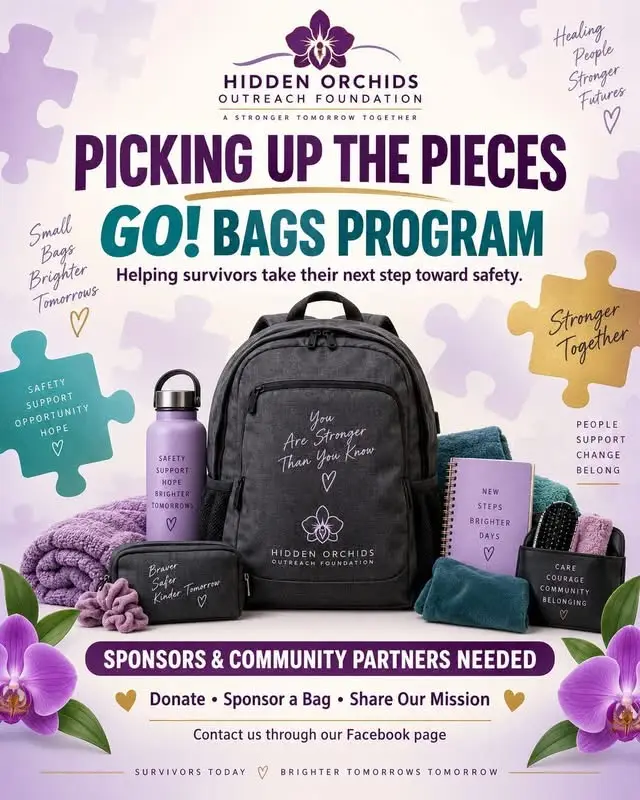
Hidden Orchids Outreach Foundation is proud to introduce the Picking Up the Pieces program, a new GO! Bag initiative created to support survivors during some of the most uncertain moments of their lives.
For someone escaping domestic violence, sexual assault, human trafficking, or another dangerous situation, leaving may happen without warning. A survivor may have only a few minutes to reach safety. As a result, they may leave without clothing, personal-care products, identification, transportation, a telephone charger, or supplies for their children.
In rural communities, emergency medical services and emergency departments may become the first safe point of contact. Responders already provide critical medical care and help people navigate urgent situations. Through the Picking Up the Pieces program, we hope to give participating responders another practical tool they can use when a survivor arrives with very little.
Our goal is to place specially prepared GO! Bags with participating rural EMS agencies and emergency departments. Each bag will provide immediate necessities, comfort items, and information that can help a survivor begin moving toward safety.
A GO! Bag cannot repair everything that violence or exploitation has taken away. However, it can offer dignity, reassurance, and a starting point. Sometimes, that first step is where healing begins.
Why Hidden Orchids Created the Picking Up the Pieces Program
Leaving a dangerous situation rarely follows a perfect plan. Although some survivors prepare in advance, many must act quickly when an opportunity to leave becomes available. Others may reach an emergency department after an assault, a medical crisis, or an encounter that reveals an unsafe situation.
During those moments, practical needs can create immediate barriers. For example, a survivor may need clean clothing after receiving medical care. A parent may need diapers, wipes, or a small comfort item for a child. Someone who left without a charger may struggle to contact a trusted person, advocate, shelter, or transportation provider.
Furthermore, rural geography can make the situation more complicated. Communities may have fewer nearby providers, longer travel distances, limited public transportation, and fewer stores that remain open overnight. Consequently, even a basic item can become difficult to obtain.
The Picking Up the Pieces program responds to that gap with preparation. Rather than waiting until an emergency occurs, we want participating agencies to have essential items and resource information ready.
Most importantly, the program centers the survivor’s dignity. A person who has experienced violence should not have to feel ashamed for needing help. Instead, they deserve a compassionate response that respects their choices, privacy, safety, and individual circumstances.
What Is a Survivor GO! Bag?
A survivor GO! Bag is a prepared collection of practical items and support information. Emergency responders can offer a bag when they encounter someone leaving or recovering from a dangerous situation.
However, the bag does not replace medical care, professional advocacy, emergency shelter, law enforcement, or crisis intervention. Instead, it complements those services by addressing immediate practical needs.
Depending on program resources, seasonal needs, agency input, and available community support, GO! Bags may include:
- Essential personal-care products
- New seasonal clothing
- Socks and undergarments
- Comfort items
- Supplies for children
- Pet-safety information
- Emergency communication resources
- Transportation information
- Domestic violence resources
- Sexual assault resources
- Human trafficking resources
- Information about shelters and advocacy programs
- Instructions for finding additional assistance
Because every survivor’s situation differs, no single bag can meet every need. Nevertheless, carefully selected supplies can provide meaningful assistance during a difficult transition.
As the Picking Up the Pieces program grows, Hidden Orchids Outreach Foundation will continue evaluating bag contents. We also plan to listen to emergency responders, advocacy professionals, survivors, and community partners. Their insight can help us prepare bags that remain practical, respectful, and relevant.
Personal-Care Essentials That Restore Dignity
Personal-care items may seem small during a crisis. Yet those items can help someone feel more comfortable and regain a sense of control.
A survivor may arrive at an emergency department without a toothbrush, deodorant, soap, shampoo, menstrual products, or other basic necessities. Therefore, the GO! Bags may include travel-size products that offer immediate support without creating a heavy or difficult-to-carry package.
Whenever possible, items should remain new, unopened, and easy to use. Unscented or gently scented products may also work better for people with allergies, medical sensitivities, or trauma-related reactions.
Above all, these supplies communicate a simple message: your comfort matters. That message may feel especially important to someone whose safety, privacy, or personal choices have recently faced violation.
Clothing and Comfort for the Next Step
A person leaving violence may not have time to pack clothing. Likewise, medical treatment or evidence collection may leave someone needing something clean to wear.
For that reason, GO! Bags may include seasonally appropriate clothing and comfort items. Depending on availability, a bag might contain a shirt, soft pants, socks, undergarments, a sweatshirt, gloves, or another basic item.
Nebraska’s changing seasons also require flexibility. For instance, winter bags may need warm socks, hats, gloves, or blankets. In contrast, summer bags may call for lightweight clothing, water bottles, or other warm-weather necessities.
Comfort items can matter as well. A soft blanket, journal, stress-relief item, or handwritten message of encouragement may help someone feel less alone.
Still, dignity must guide every donation. New, clean, practical items provide the most respectful form of assistance. Therefore, donation drives should clearly explain which sizes, products, and seasonal items the program currently needs.
GO! Bag Supplies for Children
Children may leave dangerous situations with a parent or caregiver. In other cases, emergency professionals may encounter a child during a crisis involving abuse, neglect, sexual violence, or trafficking.
Consequently, the Picking Up the Pieces program hopes to include child-appropriate supplies whenever resources allow. Possible items may include diapers, wipes, child-size hygiene products, activity books, crayons, small toys, blankets, or age-appropriate comfort objects.
A familiar or comforting item cannot erase a frightening experience. However, it may help a child feel calmer while adults manage urgent decisions.
Additionally, supplies for children can relieve one immediate burden for the adult responsible for their care. A parent who leaves quickly may worry about diapers, clean clothing, food, transportation, and where the family will sleep. Meeting even one of those needs can create room to focus on safety.
As the program develops, community partners can help us identify which child-focused items work best for different age groups. Schools, childcare professionals, healthcare providers, foster care professionals, and family advocates may offer valuable insight.
Pet Safety and Survivor Safety Often Connect
Concern for a pet can influence a survivor’s decision to leave. A person may fear that an abusive individual will harm, abandon, or use the animal as a way to maintain control.
Because of that concern, the Picking Up the Pieces program may include pet-safety information and assistance resources. Depending on local availability, those materials could connect survivors with temporary foster programs, pet-friendly shelters, veterinary assistance, boarding options, or organizations that support families with animals.
The program cannot guarantee pet placement or financial assistance. Nevertheless, accurate information may help a survivor discuss their concerns with an advocate or service provider.
Community partnerships will play an especially important role in this area. Animal shelters, veterinary clinics, rescue groups, boarding facilities, and pet-supply businesses may help us identify safer options for survivors and their animals.
By acknowledging pets as part of many families, the program can respond more fully to the realities survivors face.
Emergency Communication and Transportation Resources
Communication can become essential after someone leaves a dangerous situation. A survivor may need to call an advocate, locate shelter, reach a family member, arrange transportation, contact an employer, or speak with a healthcare provider.
However, the person may not have access to a working phone, charger, safe contact list, or private device. Therefore, the GO! Bags may include communication resources such as charging cables, portable chargers, prepaid-phone information, emergency contact cards, or instructions for accessing a safer device.
Transportation presents another challenge, particularly in rural areas. Long distances and limited public transportation may separate a survivor from shelter, advocacy, medical follow-up, or a trusted support person.
For that reason, bags may contain information about available transportation programs. As community support grows, the Foundation may also explore appropriate ways to assist with immediate transportation needs.
Any transportation or communication assistance will depend on available funding and local partnerships. Even so, clearly organized information can help responders and survivors understand which options exist.
Connecting Survivors With Trusted Resources
Practical supplies address immediate needs, but reliable information can support the next stage of a survivor’s journey.
Each GO! Bag may include carefully organized information about domestic violence, sexual assault, human trafficking, child advocacy, shelter, counseling, medical care, and other community services.
Because too much information can feel overwhelming during a crisis, the materials should remain clear and easy to scan. Important telephone numbers should appear prominently. In addition, materials should distinguish emergency services from general information lines.
The Foundation’s online support resources can provide another place to begin. That page includes Nebraska organizations and national hotlines that address domestic violence, sexual assault, child abuse, and human trafficking.
Of course, a survivor should never feel pressured to contact every organization or make an immediate decision. Instead, the resource information should present options. Trained advocates can then help the person consider which step feels safest.
Supporting Rural EMS and Emergency Departments
Emergency professionals already carry tremendous responsibilities. Therefore, the Picking Up the Pieces program does not ask responders to become counselors, investigators, or long-term case managers.
Instead, the program gives participating teams a prepared resource they can offer when appropriate. A responder can provide the bag without having to locate clothing, personal-care supplies, and hotline information during an active emergency.
This preparation may also create greater consistency. When an agency has a clear process and an available supply of GO! Bags, staff members know where to find the materials and how to access them.
Partnerships with EMS agencies and emergency departments will guide program implementation. For example, participating locations can help determine how many bags they can store, which sizes they need, how staff will access them, and when the Foundation should replenish supplies.
Additionally, feedback from responders can reveal practical concerns that may not appear during the initial planning process. By listening and adjusting, we can build a program that supports both survivors and the professionals who serve them.
A Trauma-Informed Approach to Survivor Support
Trauma can affect memory, communication, decision-making, and emotional responses. Consequently, a survivor may appear quiet, confused, angry, detached, frightened, or uncertain.
A trauma-informed response avoids judgment and recognizes that people react to danger in different ways. It also respects the survivor’s right to make decisions whenever circumstances allow.
The Picking Up the Pieces program reflects several trauma-informed principles:
- Promote physical and emotional safety.
- Respect privacy and confidentiality.
- Offer choices instead of demands.
- Avoid blaming language.
- Recognize cultural and individual differences.
- Provide clear information.
- Support survivor control over personal decisions.
- Connect people with qualified advocates and providers.
Even the way someone offers a GO! Bag can matter. A calm explanation allows the survivor to accept or decline the items without pressure.
For example, a responder might say, “We have a bag with some personal-care items, clothing, and resource information. You can take it if it would be helpful.”
That approach preserves choice while still making support available.
How the Community Can Help the Picking Up the Pieces Program
The Picking Up the Pieces program will grow through community involvement. Therefore, Hidden Orchids Outreach Foundation is seeking individuals, businesses, civic groups, healthcare partners, schools, churches, and other organizations that want to help bring the program to life.
Community members can support the initiative in several ways.
Sponsor a GO! Bag
Financial contributions can help the Foundation purchase consistent, practical items in the sizes and quantities the program needs. Moreover, financial support gives the Foundation flexibility to respond when one type of supply runs low.
A sponsor may choose to support one bag, several bags, a seasonal group of bags, or supplies for a participating agency.
Host a Donation Drive
Businesses, schools, churches, clubs, and civic organizations can host drives for approved items. However, organizers should contact the Foundation before collecting donations.
By coordinating first, groups can focus on current needs and avoid collecting unusable or excessive items. In addition, the Foundation can provide guidance about accepted products, clothing sizes, packaging, and deadlines.
Become a Community Partner
Organizations can contribute specialized knowledge, services, supplies, storage, transportation support, or professional connections.
For example, a business may provide hygiene products. A clothing retailer may donate new seasonal clothing. Meanwhile, a transportation provider may help identify travel options. An animal-welfare organization could assist with pet-safety resources.
Each partnership can address a different piece of the larger challenge.
Connect Us With Rural Responders
Community members may know EMS leaders, hospital staff members, emergency-department administrators, or rural healthcare professionals who would like to learn about the program.
Those introductions can help Hidden Orchids Outreach Foundation understand local needs and identify potential program sites.
However, participation should always involve agency approval and planning. The Foundation will work with interested organizations to discuss storage, distribution, replenishment, and staff communication.
Volunteer With the Program
As the Picking Up the Pieces program develops, volunteers may assist with organizing donations, preparing bags, checking inventory, creating resource materials, supporting community drives, or helping with outreach.
Volunteer roles will depend on program needs and available supervision. Nevertheless, people with experience in healthcare, emergency response, education, technology, logistics, social services, communications, or community organizing may bring valuable skills.
Share the Program
Awareness also matters. By sharing this announcement, community members can help us reach potential donors, participating agencies, volunteers, and survivors who need reliable resources.
Social media posts, newsletters, workplace announcements, civic meetings, and community events can introduce the program to new supporters.
Most importantly, awareness should protect survivor privacy. Public education should never identify a person receiving assistance or reveal sensitive information about a specific case.
Businesses and Civic Organizations Can Create Lasting Impact
A GO! Bag program requires more than a one-time collection of supplies. It needs dependable partners who can help maintain inventory, replace seasonal items, and respond as participating agencies use the bags.
Businesses can support the program through financial sponsorships, product donations, employee drives, transportation assistance, or printing services. Similarly, civic organizations may sponsor community collections, volunteer packing events, or educational presentations.
Healthcare partners can provide insight into emergency-department needs. Meanwhile, rural EMS agencies can help the Foundation understand space limitations, response conditions, and practical distribution procedures.
Schools and youth organizations may support age-appropriate supply drives. Likewise, animal-welfare partners can strengthen the program’s pet-safety information.
Together, these contributions create a network of support. One organization does not need to solve every problem. Instead, each partner can provide one piece that helps a survivor move toward safety.
Help Us Bring the Picking Up the Pieces Program to Life
The Picking Up the Pieces program begins with a simple belief: survivors deserve practical help, compassionate treatment, and access to trustworthy resources.
A bag filled with necessities cannot undo violence, assault, exploitation, or fear. Yet it can provide clean clothing, personal-care products, comfort, communication support, and information at a moment when those items matter deeply.
Furthermore, placing GO! Bags with rural EMS agencies and emergency departments can help support communities where specialized services may be farther away. Responders can access the bags quickly, while survivors can receive essential items without having to explain every immediate need.
Hidden Orchids Outreach Foundation is now seeking individuals, businesses, civic organizations, emergency-response partners, healthcare professionals, and community supporters who want to help build this program.
You can make a difference by sponsoring bags, donating approved supplies, hosting a coordinated drive, volunteering, connecting us with rural agencies, or sharing the program with others.
To discuss donations, partnerships, volunteer opportunities, or agency participation, please contact Hidden Orchids Outreach Foundation. You can also learn more about our mission and outreach work.
Together, we can help survivors take the first steps toward safety, regain a sense of dignity, and begin picking up the pieces.
If you or someone else faces immediate danger, call 911. Hidden Orchids Outreach Foundation does not provide emergency response, crisis intervention, shelter, medical care, legal representation, or investigative services. Please contact emergency services or a qualified local or national provider when you need direct assistance.